
The intensity-versus-control problem
Here's the thing about vibrators: they're often sold as if intensity is the only dial that matters. Stronger, faster, more power. But that's not how pleasure actually works. You can have a device that's gentle and still feel scattered, unfocused, unsure what's happening where. Or you can have something powerful that feels overwhelming because you can't shape it.
The sweet spot isn't always the highest setting. It's the setting that lets you feel what's actually happening and respond to it.
Why less intense doesn't mean less effective
Lower intensity gives your nervous system space to detect what's happening. When vibration is too strong, the sensation floods in all at once. Your brain can't distinguish the nuance. You go numb to the subtlety. With a Lem vibrator dialed down to pattern 1 or 2, you're often building a better orgasm because you can actually feel the buildup.
There's also the pacing issue. High intensity trains your body to chase sensation quickly. Lower intensity forces you to slow down, which for many people triggers deeper arousal. You're not sprinting to the finish line. You're building.
And then there's control. When you're using lower settings, you have more room to adjust position, angle, and pressure without the device overwhelming you. You become an active participant instead of someone being vibrated at.
How to adjust your Lem vibrator for precision
The Lemon clitoral vibrator design gives you several ways to dial down intensity without sacrificing responsiveness.
Start at pattern 1. Don't use it as a starting point you'll quickly abandon. Stay here for at least 5 minutes. Let your body recognize what's happening. You're looking for a hum that feels present but not invasive.
Experiment with angle and distance. This is where precision lives. Instead of pressing the vibrator directly against your clitoris, angle it slightly. Hold it a millimeter or two away from skin. Let the vibration travel to the tissue rather than directly stimulating it. This diffuses the intensity while keeping the sensation alive.
Use rhythm pauses. Pattern 1 on a Lem vibrator is steady. But you don't have to use it steadily. Try touching for 30 seconds, pulling away for 20, then coming back. This creates rhythm and anticipation, which often builds stronger orgasms than continuous contact.
Many people find that combining pattern 1 with strategic pausing gets them to more intense sensation than holding pattern 3 against their skin the whole time. The reason is simple: your nervous system needs variation to stay interested.
The role of warmup and arousal
Lower intensity works better when you've already built some arousal. If you jump straight to a device with nothing else happening, even pattern 1 might feel underwhelming. You need blood flow, mental engagement, maybe touch from a partner or your own hand.
Spend 10 to 15 minutes on other sensations first. Your own touch, a partner's touch, kissing, whatever gets you interested. Then introduce the vibrator. You'll notice it feels more effective because your body is already primed to feel it.
This is especially true if sensitivity is inconsistent for you. Lower intensity vibrators reward foreplay in a way that higher-powered devices don't always require. You're not relying on the device to do all the heavy lifting. You and the device are working together.
Positioning for comfort and sensation
When you're working with gentler settings, positioning becomes more important. You have more room to experiment because you're not fighting against overwhelming sensation.
Try lying on your side with the vibrator held at a slight angle instead of directly perpendicular. Try sitting and using the device hands-free with a small pillow between your legs. Try standing. Different positions change which nerve endings get stimulated. At lower intensities, these positional differences become way more noticeable and explorable.
Also consider your pelvic floor. Lower intensity lets you feel tension you might miss at higher settings. If you notice your pelvic floor tightening, that's actually useful information. You can breathe through it, relax it, let it do its thing. You have the sensitivity to know what's happening.
When partnered pleasure meets lower intensity
If you're using a Lemon clitoral vibrator with a partner, lower settings open up options that high power doesn't. Your partner can hold it for you without it feeling aggressive. You can have a conversation while it's in use. You can shift it based on what feels good in real time instead of being pinned down by overwhelming sensation.
Many couples find that gentler intensity actually builds more connection because there's more room for communication and adjustment. "A little higher." "Move it left." "Slower." At pattern 1, you're steering together. At pattern 5, you're just trying to hang on.
That doesn't mean high intensity is bad for partnered play. It's just different. Lower intensity often suits longer sessions and more nuanced work. Higher intensity suits quicker finishes and specific moments.
The sensitivity sweet spot shifts
Your sensitivity isn't static. It changes throughout your cycle, with stress, with age, with relationship status, with medication, with so many things. The whole point of having a tool like a Lem vibrator with multiple patterns is that you can meet your body where it actually is, not where it was last time.
Some weeks you'll want pattern 1 the whole time. Other times you'll start there and work up to pattern 3. Both are fine. The goal is paying attention, not hitting some imaginary standard of what using a vibrator should look like.
If you're someone who tends to numb out with high intensity, lower settings might be your actual default. There's no shame in that. A lot of people get significantly better results staying in the 1 to 2 range consistently than they ever did chasing higher numbers.
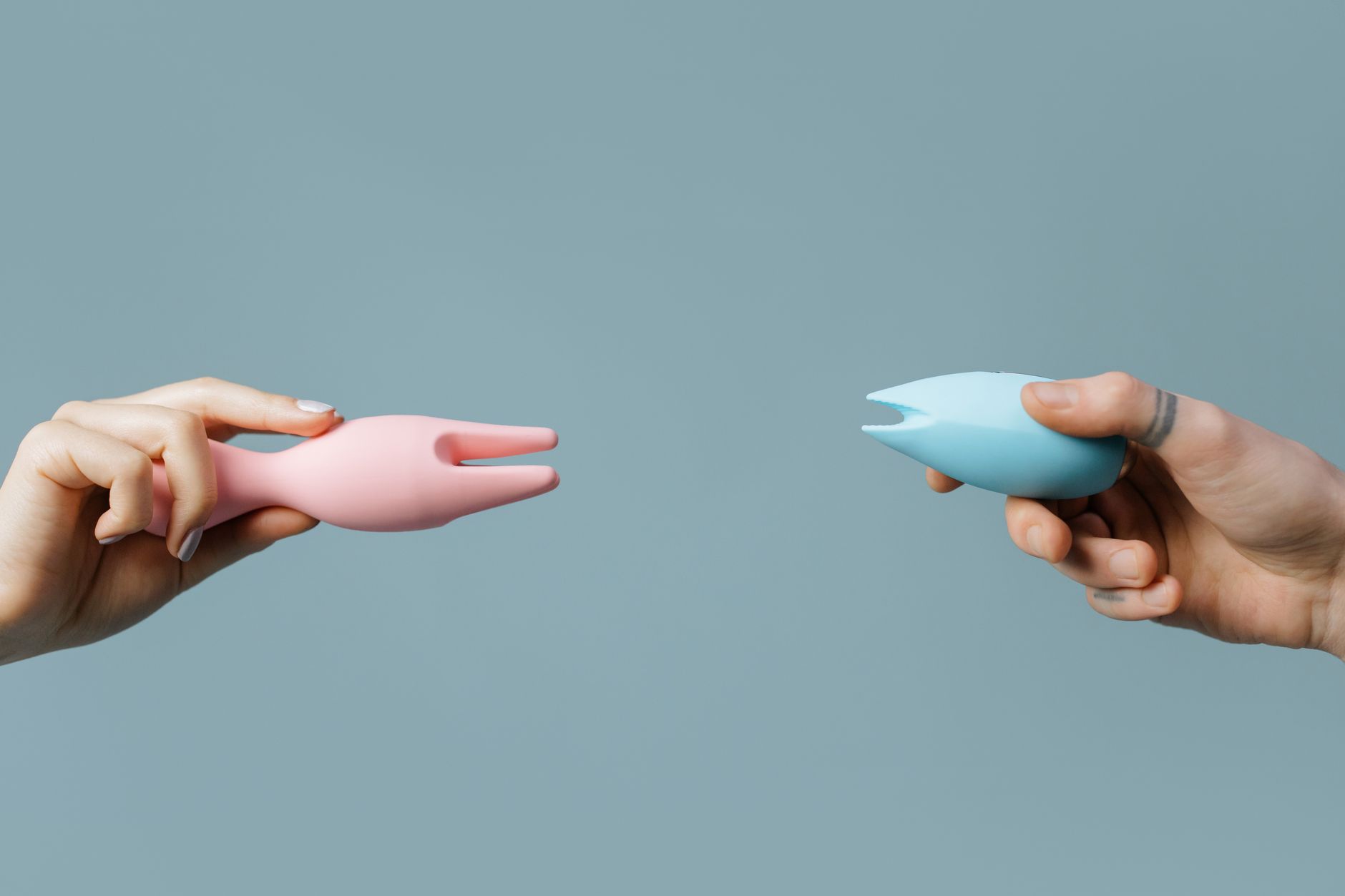
Photo by cottonbro studio on Pexels
Troubleshooting: when lower intensity feels too gentle
If you've tried pattern 1 for several sessions and it just doesn't feel like enough, the issue is usually not intensity. It's likely one of these:
Arousal level. You might not be warmed up enough. Spend more time on other sensations first. Read erotica, watch something that interests you, get into your body before the vibrator comes out.
Pressure application. You might be expecting the vibrator to work while barely touching. Try pressing it firmly against your skin while keeping the pattern low. Firm contact with low intensity often works better than light contact with medium intensity.
Positioning. Move the vibrator around. You might have one spot that responds really well and another that feels dead. Some people get much better results if the vibrator is slightly off to one side rather than centered.
Patience. It takes longer to build to orgasm with lower intensity. If you're used to 5 minutes total, you might need 15 or 20. That's not a flaw. That's actually often a better orgasm.
If you've worked through all of those and you're still not feeling it, then maybe pattern 1 genuinely isn't your baseline. You can move to pattern 2. The point of starting low isn't to stay low if it's not working. It's to find the actual intensity that works for your body, which might be different from last year or last month.
FAQ: control and intensity with Lemon vibrators
What's the difference between starting at pattern 1 versus jumping to pattern 3?
Starting low gives your nervous system time to register what's happening. You build anticipation. Your body has time to respond gradually. Jumping to pattern 3 floods your sensory system, which can feel overwhelming even if you don't consciously notice it. The result is often faster initial response but less satisfying overall sensation.
Can I use a Lem vibrator without ramping up to higher patterns?
Absolutely. Some people find their best results staying in patterns 1 and 2 consistently. There's no rule that says you have to work your way up the intensity ladder. If lower patterns work for your body, that's your answer.
Does lower intensity take longer to result in orgasm?
Usually yes, but that's not actually a drawback. Longer buildup often means more intense final sensation. You're not racing to a destination. You're exploring the journey. Many people who switched from high intensity to low intensity report more satisfying orgasms overall, even though they take longer.
What if my partner finds low intensity frustrating to watch?
That's a conversation worth having. Some partners worry that you're not enjoying yourself because you're not using the device aggressively. The truth is that what looks gentle is often what feels best. You might also try letting your partner see what pattern 1 feels like on them. That usually clarifies things quickly.
Is there a technique for making pattern 1 feel stronger without increasing vibration intensity?
Yes. Firm direct contact, sustained pressure over a longer period, combined with mental focus and arousal all make lower intensity feel significantly more powerful. You can also try pattern 2 with pauses built in, which creates variation your nervous system registers as intensity even though the base setting is low.
Should I use lube with lower intensity vibration?
Lube is never a bad idea, but with lower intensity you might not feel like you need it the same way you would with higher intensity. Try it both ways. Some people find lube makes low intensity feel even better because the device glides and the sensation stays consistent. Others find it mutes the vibration a bit. Your preference matters.
The confidence piece
Using lower intensity means trusting that your pleasure doesn't have to look powerful to actually work. It means believing that slowness is not weakness. That precision beats aggression. That taking your time is better than rushing.
For a lot of people, especially women in their 30s, 40s, and beyond, that's a genuine shift. We've internalized the idea that pleasure should be intense and fast and climactic and visible. Learning that your best sensation might come from pattern 1 on a Lem vibrator, applied at an angle, with pauses built in, in a position that feels comfortable, with a partner who gets it or alone with all the time you need. That's not settling. That's actually knowing yourself.
Once you get there, everything changes. You stop looking for the strongest device. You start looking for the one that matches how your body actually works. And for most people, that's a much better place to be.
Get started with control
If you're ready to explore how lower intensity clitoral vibrators can work for you, start with pattern 1. Give it time. Adjust position and angle. Build arousal first. Then let the device do the subtler work. Your body will tell you what works. That's the whole point of having good tools. They listen, and so can you.
If you have questions about what might work for your specific situation, we're here to talk. Get in touch.