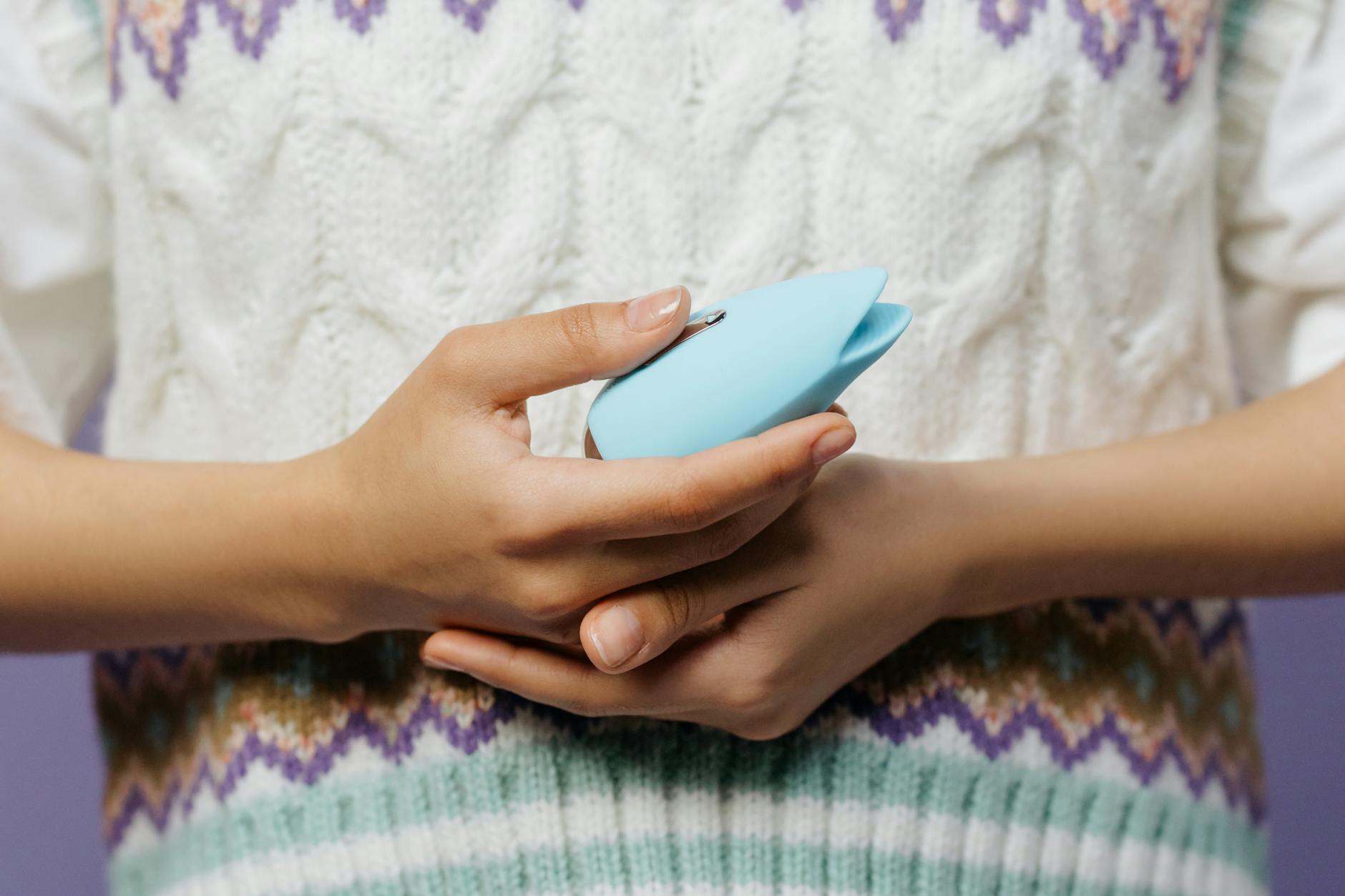
When desire goes missing, so does everything else
Your partner used to want you. Now they don't. Not just sometimes, but consistently, over months or longer. Maybe they're stressed. Maybe it's health stuff. Maybe you both changed. The reason almost doesn't matter when you're lying awake at 2 a.m. wondering if you're still desirable at all.
Here's what I see in my practice: when one partner's desire drops and stays dropped, the other partner tends to freeze. They stop initiating. They start performing desire they don't feel. They wait. They wonder if using a vibrator alone means they're giving up on the relationship.
They're not. In fact, the opposite is true.
The counterintuitive part: solo pleasure is part of rebuilding together
Every relationship therapist worth their license will tell you that sex is never just about sex. It's about feeling wanted, valued, and alive. When your partner loses interest, you don't lose your need for any of those things. You just lose the source you relied on.
That's where the mistake happens. Most people think the solution is to fix the partner's desire first, then handle sex later. But desire doesn't work that way. Desire responds to pleasure. Pleasure responds to attention. And right now, neither of you is paying attention to pleasure at all.
Using a lemon clitoral vibrator alone isn't the consolation prize. It's the reset button. When you spend time with your own pleasure, two things happen. First, you remember what arousal feels like. You reconnect with your body's signals. Second, you separate your pleasure from your partner's responsibility to provide it. That distinction matters enormously when you're rebuilding.
Starting with solo pleasure when touch feels loaded
One of the hardest things about desire mismatch is that every touch becomes a negotiation. A hand on the arm feels like a proposal. A kiss could mean something. Nothing is casual anymore. That's exhausting for both of you.
When you create solo pleasure time with a tool like a lemon clitoral vibrator, you're not negotiating anything. You're not asking for something your partner can't give. You're not performing arousal you don't feel. You're just creating space where pleasure exists without strings.
Start small. Twenty minutes. Low pattern. No performance. The goal isn't the fastest orgasm. It's remembering that your body still responds. That you still feel things. That pleasure is something you can access independently.
This sounds selfish. It's not. It's necessary maintenance. You wouldn't expect your partner to be emotionally present if they hadn't slept in weeks. You shouldn't expect your own sexuality to stay intact if you're not tending to it.
The shift: from solo back to partnered, if that's what you want
Once you've spent a few weeks reconnecting with your own pleasure, something shifts. You're not desperate anymore. Desperation kills intimacy faster than anything else. When your partner feels the weight of being your only source of pleasure, they feel trapped. The pressure makes them pull away further.
But when you've been tending to your own arousal with a vibrator, you show up different. You're less needy. More present. More actual. Your partner might notice. They might ask about it. Let them.
That's the conversation to have. Not "please want me again" but "I've been doing something that's helped me feel like myself. I wanted to tell you about it."
Some partners respond by getting curious. Some start thinking about their own pleasure and what's been blocking it. Some realize the desire gap is actually about something completely unrelated to sex. The point is, you've shifted from frozen to moving, and movement is the only thing that breaks a stalemate.
What patterns actually work when trust is fractured
If desire mismatch has been going on long enough, touch itself might feel risky. Like you're offering something and it's being rejected. That's not just low libido. That's an injury.
When you use a lemon vibrator in your solo time, experiment with patterns that feel completely different from partnered sex. Some people find that the consistent suction of a clitoral vibrator feels safer than variable touch. It's not negotiable. It's not going to stop halfway through. It's just there, doing exactly what it's supposed to do.
Start with the lower patterns. Let yourself feel what happens when stimulation is consistent and gradual. You might find that your arousal builds in a completely different way than it did when you were waiting for your partner to be interested.
This is information. Store it. You might eventually want to share some of this with your partner. "I discovered that I respond really well to consistent stimulation. That might be worth knowing." But that's later. Right now, you're just gathering evidence that you still work.
The conversation you need to have, and when to have it
Before you bring a vibrator into any discussion with your partner, make sure you're grounded in why you're using it. If you're using it as a weapon, that will read. If you're using it as evidence that they've failed, that will read too. Those conversations end badly.
Use it for a solid month or two on your own. Let it become normal to you. Then, pick a time when you're not in crisis mode to mention it. A random Tuesday afternoon. Not after being rejected. Not during an argument about sex.
"I've been taking some time for myself and exploring what feels good. I think it's helping me feel more like myself." That's it. You don't need permission. You're not asking them to do anything except know it's happening.
If they want to know more, tell them. If they don't, that's information too. That tells you whether they're capable of being curious about your pleasure right now. Sometimes the answer is no, and that's data you need for bigger conversations about whether this relationship still works for you.
When desire mismatch points to something bigger
Here's what therapists know that people in the thick of it often don't: desire mismatch is usually a symptom, not the disease. Your partner might have lost interest in sex because they're depressed. Because they're on antidepressants. Because work has become consuming and they're completely depleted. Because they're aging and their body is changing. Because they don't feel seen in the relationship anymore.
Using a lemon clitoral vibrator doesn't fix any of that. But it does something more useful. It buys you time. It keeps you from spiraling into shame. It gives you something to do besides wait.
And sometimes, when one partner starts reclaiming their own pleasure, it creates a little pocket of space for the other partner to examine what's really going on. "Oh, you're taking time for yourself? Maybe I should figure out what's happened to me." That's the valuable opening.
If the desire gap is connected to a deeper issue, you'll eventually need to address it. Therapy, medical evaluation, honest conversations about what you both need. A vibrator is not a substitute for that work.
The permission you actually need
You don't need your partner's permission to use a clitoral vibrator. You don't need their approval of your pleasure. You don't even need them to understand why this matters right now.
What you might need is permission from yourself to have pleasure that isn't dependent on their desire. To reclaim arousal as something that belongs to you, not something you were granted when they were interested.
Using a tool like a lemon clitoral vibrator is one of the clearest ways to give yourself that permission. It's a physical act that says: my body still works. I still deserve to feel good. This isn't dependent on whether someone else wants me today.
That's not settling. That's not giving up on your relationship. That's tending to yourself while you figure out what comes next, whatever that is.
Frequently Asked Questions
What if my partner finds out and feels hurt or betrayed?
This fear is normal and worth taking seriously. But here's what I tell people: a healthy partner is not hurt by their partner's solo pleasure. They might feel insecure, and that's a conversation worth having. But hurt and betrayal? That usually points to control dynamics that go deeper than this. If your partner genuinely forbids you from using a vibrator, that's not about the vibrator. That's about power. And that's worth examining with a therapist, either alone or together.
Can using a vibrator alone make me less interested in partnered sex?
No. Actually, the opposite happens most of the time. When you feel pleasure and arousal regularly, you become more interested in sex, not less. The key difference is that your interest comes from your own desire, not from trying to fix the problem by being available. That's a much more durable foundation.
Should I try to use a vibrator together with my partner, even though they're not interested in sex?
Not yet. Right now, your partner's lack of interest in sex is a barrier. Introducing a vibrator into that dynamic feels like pressure, even if you don't intend it that way. Solo time first. Rebuilding your own relationship with pleasure first. That conversation with your partner can happen later, if you decide it's worth having.
How often should I be using a clitoral vibrator if my partner has lost interest?
As often as feels good. Some people find weekly time works. Some do it three times a week. There's no rule. The point is consistency and presence. You're not doing this to punish your partner or prove something. You're doing it because your body deserves attention. Frequency matters less than regularity.
What if rebuilding solo pleasure doesn't help my relationship?
It might not. And that's okay. Using a vibrator isn't a magic fix. If your partner's lost interest is connected to deeper incompatibility, or if they're unwilling to examine what's happening, rebuilding your own pleasure might actually clarify that the relationship needs to change. That's not a failure. That's information. And information is what you need to make an honest decision about what comes next.
Is it weird to use a clitoral vibrator if I've never used one before and my partner's loss of interest is recent?
No. If anything, this is exactly the time to explore. When partnered sex feels fractured, solo exploration with a tool designed for pleasure can feel grounding and less complicated. You're not performing for anyone. You're just learning what your body responds to. That's valuable information regardless of what happens in your relationship.
The real work starts with you
I won't pretend that using a lemon clitoral vibrator solves desire mismatch. It doesn't. What it does is give you an anchor point while you figure out what's actually happening in your relationship.
Sometimes that leads to reconnection. Sometimes it leads to honest conversations about what you both need. Sometimes it leads to the decision that this relationship isn't working anymore. All of those outcomes are better than the frozen place you're in right now.
Your pleasure matters. Not as a performance for your partner. Not as evidence that they should want you. But as proof that you still exist, still feel, still deserve good things. That's where you start. Everything else builds from there.